
English| EUR
Suggested for you
More currencies
Choose a language
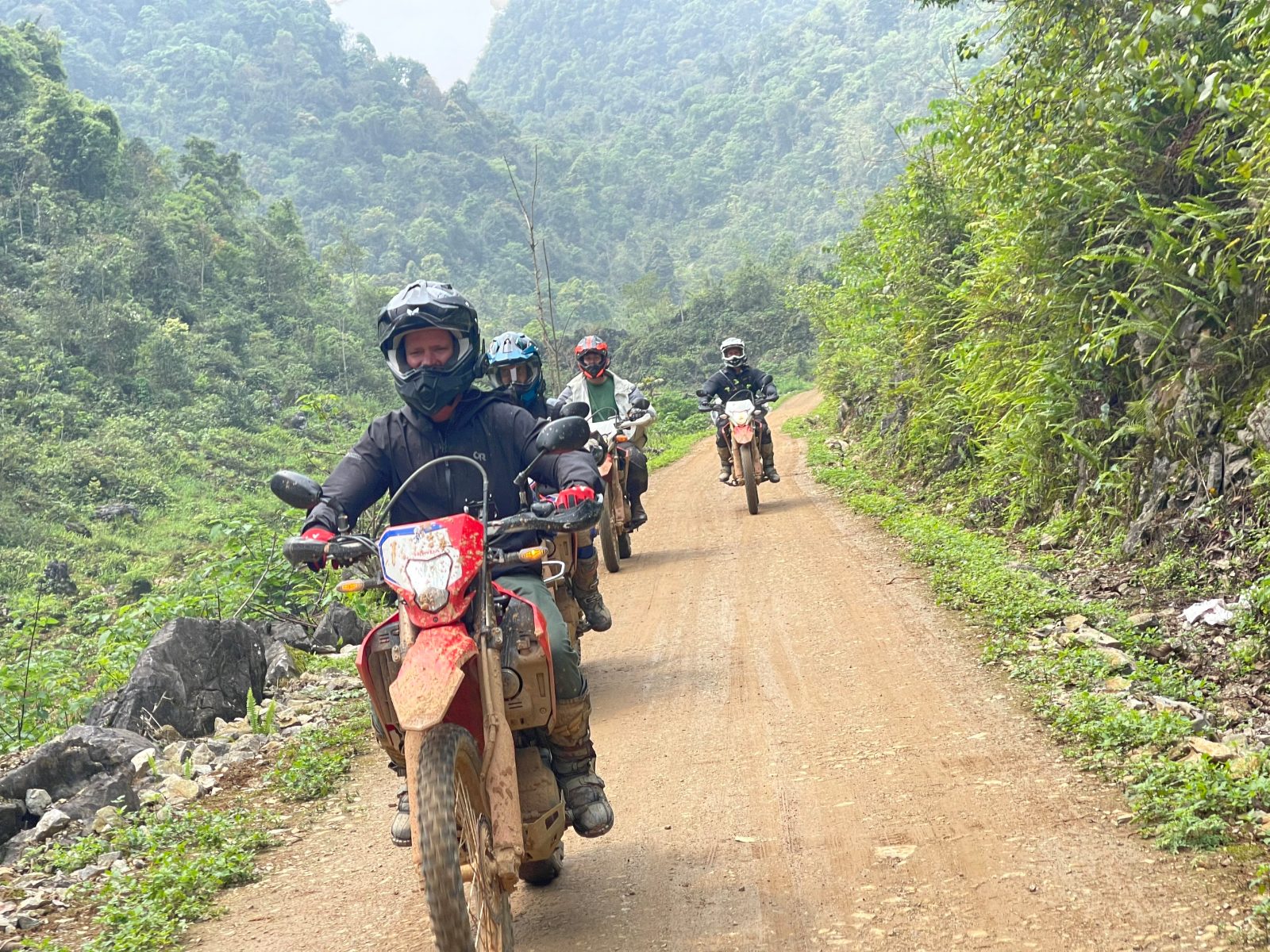
The Cao Bang Loop traces 300 kilometers of mountain passes, limestone karst terrain, and remote ethnic minority villages across Vietnam's northernmost province. Packing for this multi-day route requires balancing weather variability, limited resupply options in rural areas, and the practical constraints of motorcycle luggage. This guide covers the essential items, layering strategies, and gear priorities that match the route's elevation changes and infrastructure realities.
Quick answer
A complete cao bang loop packing list includes waterproof layers, thermal base layers for elevation, a 30-40 liter soft-sided bag, motorcycle gloves, sun protection rated SPF 50+, a first-aid kit with blister treatment, and Vietnamese dong in small denominations since ATMs are sparse beyond provincial towns. The route crosses passes above 1,000 meters where temperatures drop 8-12 degrees Celsius below valley levels, and afternoon rain is common from May through October. Pack for self-sufficiency between resupply points that average 60-80 kilometers apart.
The Cao Bang Loop operates as a public road network spanning Cao Bang Province, connecting Ban Gioc Waterfall, Nguom Ngao Cave, and the karst formations of the Geopark across a 3-4 day circuit that climbs through six distinct elevation zones. Unlike urban Vietnam, the loop passes through regions where the nearest pharmacy, ATM, or gear shop may be two hours behind you on a mountain road with no cellular signal. What you carry determines your range of response when weather shifts, a strap fails, or a minor scrape needs cleaning before nightfall in a village guesthouse. Motorcycle luggage capacity dictates the weight ceiling—most semi-automatic rentals pair with a 30-40 liter waterproof duffel lashed to the rear rack, leaving no room for redundant items or bulk. Prioritize multi-use pieces: a sarong that functions as a towel, temple cover, and laundry line; a headlamp that doubles as a bike repair light; a rain jacket with pit zips that transitions from storm shell to wind layer. The route's northern latitude and elevation mean October through March brings night temperatures near freezing in Trung Khanh District, while April and May deliver valley heat above 32 degrees Celsius by midday, requiring a cao bang loop packing list that spans a 25-degree range within a single day. Waterproofing extends beyond rain gear—the loop crosses dozens of river valleys where humidity saturates fabric overnight, and a single downpour on Ma Phuc Pass can soak through an unprotected pack in six minutes. Pack electronics, documents, and cash in nested dry bags, and assume any item exposed to air will accumulate moisture. Footwear must handle both motorcycle pegs and the uneven stone paths leading to Pac Bo Cave or the Geopark's viewpoints; trail runners with aggressive tread outperform fashion sneakers or rigid hiking boots in this mixed-use scenario. The route's remoteness makes repair supplies non-negotiable: zip ties for rack fixes, duct tape for torn bags, a multi-tool, and a tire patch kit. Guesthouses provide meals, but snack resupply between towns is limited to small shops stocking instant noodles and biscuits—carry energy bars, electrolyte powder, and a reusable water bottle with a 1.5 liter minimum capacity. Sun exposure intensifies with altitude; SPF 50+ sunscreen and a buff to cover the neck prevent the windburn that appears after four hours of exposed riding through the Geopark's treeless plateau sections. The loop is rideable year-round, but the gear you bring must account for the fact that you are the repair shop, the pharmacy, and the weather station for every hour you spend between Cao Bang city and the next resupply point.
“What you carry determines your range of response when weather shifts, a strap fails, or a minor scrape needs cleaning before nightfall in a village guesthouse.”
Complete these steps before departure to ensure a safe and legal ride through northern Vietnam's mountain passes.
The optimal window to experience the Cao Bang Loop is during the dry season from October to April, when stable conditions facilitate easier navigation of the mountainous terrain. Regardless of the month, travelers should prioritize the 08:00–16:00 arrival window to ensure adequate daylight for safe riding and photography.
Cool and dry, 15°C–25°C
Expect clear skies and minimal rain, making it the most reliable time for travel.
Warm and humid, 20°C–32°C
Frequent heavy rainfall requires waterproof gear and extra caution on mountain passes.
—
This period provides the best daylight for navigating passes and reduces the risk of driving in low-visibility evening conditions.
Verdict: The best time for the loop is between October and April, strictly adhering to the 08:00–16:00 daylight window to maximize safety and visibility.
The Cao Bang Loop passes through ethnic minority villages where modest dress and respectful behavior are expected. Carry comprehensive travel insurance, a valid driving license with IDP, and vehicle registration documents at all times.
Everything you need to know about cao bang loop packing list
A comprehensive cao bang loop packing list should include high-quality rain gear, sturdy footwear, and a personal first-aid kit for mountainous terrain. Ensure you carry layers to accommodate changing weather conditions throughout the day.
When preparing your cao bang loop packing list, prioritize moisture-wicking materials and durable riding gear. Because you will navigate limestone landscapes and unpredictable showers, versatile clothing is essential for comfort.
There is an entrance fee of 0 VND for the Cao Bang Loop route as it is a public road network. You do not need to purchase tickets to access the winding mountain passes of this province.
The best arrival window is 08:00–16:00 to ensure optimal daylight for navigating mountain passes and scenic photography. Planning your travel within these hours significantly improves safety and visibility on the road.
Traveling with children requires careful planning and specialized safety equipment that goes beyond a standard cao bang loop packing list. Ensure you have appropriate helmets and consider the physical demands of long days on a motorcycle or in a vehicle.
The most common mistake is failing to waterproof your belongings before departure. Even during drier seasons, weather in the highlands can shift rapidly, making a dry bag a crucial component of your cao bang loop packing list.
For the safest experience, aim to be on the road between 08:00 and 16:00. This timeframe maximizes your exposure to natural light and helps you avoid navigating difficult passes in the dark.
Cao Bang Loop Map
Read more GuideCao Bang Loop Price
Read more GuideCao Bang Loop Route
Read more Tickets & toursCao Bang Loop Tour Companies
Read more Tickets & toursCao Bang Loop Easy Rider
Read more GuideCao Bang Loop vs Ha Giang
Read more Tickets & toursCao Bang Loop from Hanoi
Read more GuideCao Bang Loop Police Checkpoints
Read more