72 hr
3-Day Cao Bang, Pac Bo & Ba Be Lake Tour
Journey through revolutionary history, cascading waterfalls, and pristine mountain lakes in Vietnam's northeast
Reserve
Hand-picked by our editors — only the best 5 loop experiences from 27 reviewed.
Verified partners for every tour, free cancellation where available, and instant confirmation on every booking.
72 hr
Journey through revolutionary history, cascading waterfalls, and pristine mountain lakes in Vietnam's northeast
Reserve
48 hr
Journey through northern Vietnam's highlands to witness thundering cascades and mountain villages
Reserve
72 hr
Conquer Vietnam's most spectacular mountain passes on a three-day guided motorbike journey through remote highlands.
ReservePrices from verified partners. Availability updates in real time at checkout. Free cancellation policies apply where shown.
The landmarks, rooms, and views travelers on this tour remember — all visible on a single visit.
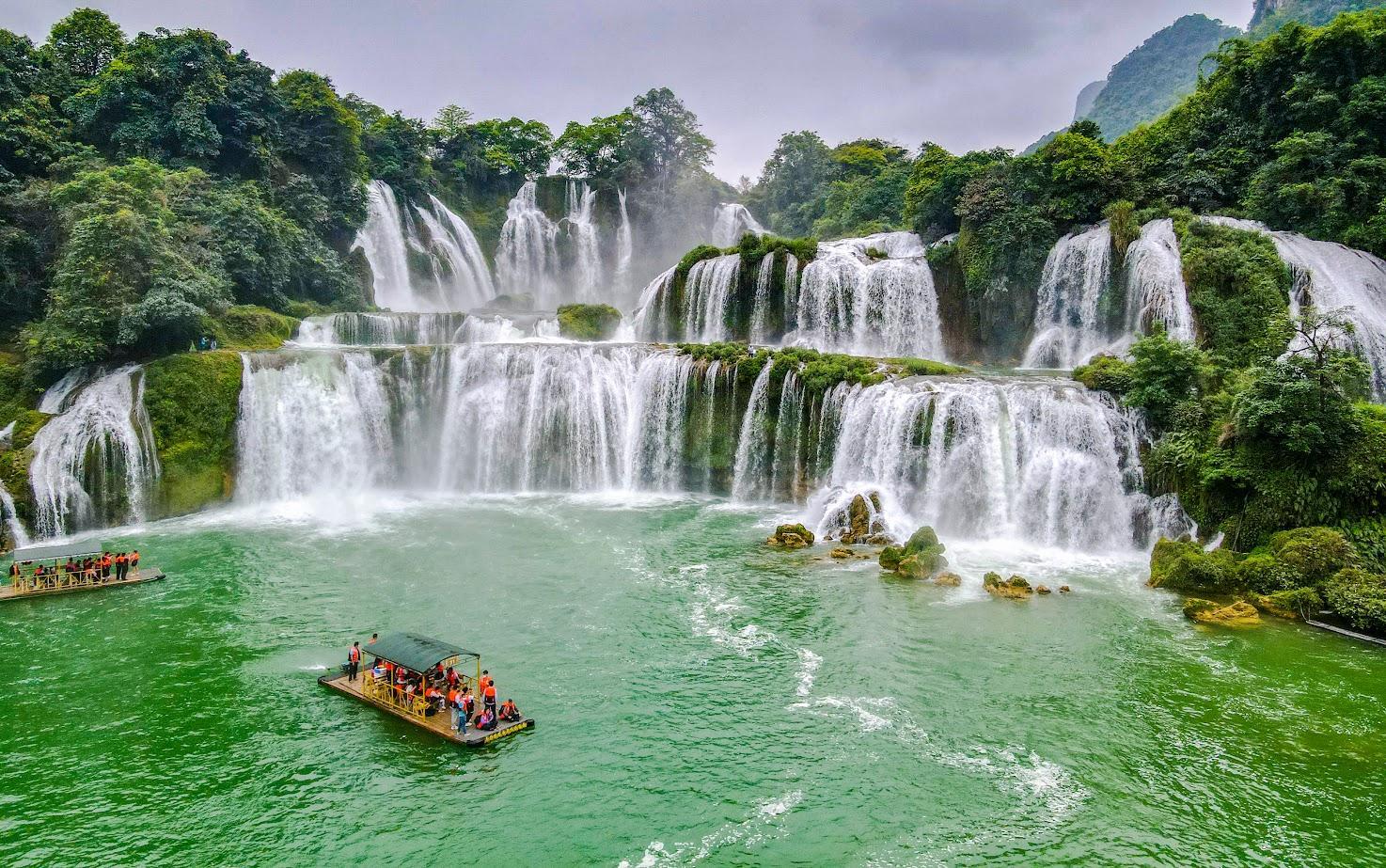
The waterfall features three levels and marks the natural border with China. It is 30 meters high and 300 meters wide.
This cave stretches over 2 kilometers underground with unique stalactite formations. It was discovered in 1921.
This historic site was the residence of Ho Chi Minh after his return to Vietnam in 1941. The area is defined by the clear waters of Lenin Creek.
This mountain pass is famous for its seven distinct loops winding through limestone peaks. It is a highlight for scenic photography.
This unique peak features a hole through the summit, resembling a natural eye. It is surrounded by lakes and karst hills.
The Ha Giang Loop is more physically demanding, while the cao bang loop from hanoi offers a more tranquil exploration of northeastern karst landscapes and regional history.
| Feature | Top pick Cao Bang Loop | Ha Giang Loop |
|---|---|---|
Terrain Difficulty |
Moderate slopes | Extremely rugged and steep |
Scenery Type |
Lush waterfalls and valleys | Dramatic mountain passes and cliffs |
Tourist Crowd Level |
Low to moderate | High and concentrated |
Cultural Depth |
Diverse ethnic village focus | Deep tribal heritage intensity |
Driving Requirements |
Standard motorcycle experience | Advanced riding proficiency required |
Typical Duration |
3 to 4 days | 3 to 5 days |
| See tickets → |
Verdict: Those seeking the cao bang loop from hanoi tours will find a less saturated path, whereas the rival loop provides a more intense, classic high-altitude adventure for those booking cao bang loop from hanoi tickets or similar regional travel packages.
Choose your ticket, select your date, and reserve in under two minutes. Secure checkout handled by our verified partner.
Instant confirmation by email, with a mobile voucher you can save offline. No printing, no queuing at a collection desk.
Arrive at the entrance, show your voucher on your phone, and walk in. Most tickets include priority or skip-the-line access.
Practical details for your visit straight from our verified partners — hours, access, rules, and how to get there.
Central Hanoi
Check with your tour operator for specific pickup
Regular sleeper buses depart from My Dinh station in Hanoi to Cao Bang city.
Wear modest clothing, especially when visiting local ethnic minority villages along the cao bang loop from hanoi route. Sturdy riding gear or long trousers are recommended for motorcycle travel.
Keep valuables in a secure, waterproof bag while navigating the cao bang loop from hanoi. There are no centralized luggage storage facilities for the entire route.
Photography is permitted throughout the public areas of the cao bang loop from hanoi. Always ask for permission before taking portraits of local residents.
The terrain along the cao bang loop from hanoi is rugged and mountainous. Accessibility is limited for individuals with mobility challenges.
Mobile reception is intermittent in remote valleys along the cao bang loop from hanoi. Download offline maps to ensure consistent navigation.
The cao bang loop from hanoi requires significant stamina for motorcycle or car travel. It is better suited for older children or teens who can handle long transit times.
Local roadside stalls offer traditional Vietnamese meals throughout the cao bang loop from hanoi. Carrying bottled water is essential due to the remote nature of the mountain passes.
Pets are generally not recommended for the multi-day cao bang loop from hanoi trip. Check individual transport policies before bringing animals.
Always maintain a safe distance from other vehicles on winding mountain roads. Respect local customs and quiet hours in residential villages.
Best time to go, insider tips, nearby landmarks, and the cancellation fine print — flip through to skim what matters to you.
How crowds, weather, and events shift across the year.
Mild temperatures and blossoming flora make for pleasant riding conditions.
Small details that turn a good visit into a great one.
Reservations for popular cao bang loop from hanoi tours fill up during peak season.
Non-bookable sights within a short walk — free to visit, easy to pair.
Massive waterfall spanning the China-Vietnam border.
Flexible, no hidden fees.
Individual tour operators set their own policies for each cao bang loop from hanoi tour. Refer to your booking confirmation for the specific refund deadline.
Hand-picked options within walking distance — pick a district for vibe, or a specific hotel for convenience.
Authentic local hospitality in traditional houses.
The Cao Bang loop from Hanoi unspools across 300 kilometres of provincial highway, threading limestone towers that rise vertically from rice paddies and jungle canopy. This is the northeastern frontier of Vietnam, where Route 4A climbs from Red River flatlands into the high karst country that defines the border with Guangxi. The loop itself is not a single waymarked circuit but a network of secondary roads linking Cao Bang town, Ban Gioc Waterfall, Pac Bo Cave, and Ba Be Lake, typically ridden over two to three days by travellers departing the capital. Ban Gioc Waterfall anchors the route. At 30 metres tall and 300 metres wide, it is the largest transnational cascade in Asia, split evenly between Vietnam and China by the Quay Son River. The falls were militarised during the 1979 border war, rendering the valley inaccessible for decades. When the crossing reopened in 2006, visitors began arriving by motorbike, drawn by the twin curtains of water that thunder into a turquoise basin ringed by mulberry groves. The sound carries two kilometres downstream. Pac Bo Cave, 50 kilometres north, is the grotto where Ho Chi Minh sheltered in 1941 after three decades abroad, planning the Viet Minh campaign from a stone ledge above the Lénine Stream. The cave remains unlit, its entrance marked only by a plaque and a red star. The geology of Cao Bang Province belongs to the South China Karst, a UNESCO site spanning three countries. The towers are Permian limestone, laid down 280 million years ago when the region sat beneath a shallow sea. Tectonic collision with the Indian plate tilted the beds vertically, and monsoon rains dissolved the softer strata, leaving freestanding pinnacles. The Ma Phuc Pass, at 1,300 metres, offers the clearest transect: riders ascend through five climate zones in 20 kilometres, from banana plantations to cloud forest hung with epiphytes. The road surface is asphalt, narrow and cambered, with no guardrails on the outer curves. Most Hanoi-based tour operators now offer the Cao Bang loop as a guided package, bundling motorcycle hire, fuel, and homestay accommodation in Tay and Nung villages. Ba Be Lake, a 500-hectare reservoir formed by a landslide dam, serves as the southern terminus. The lake sits in a trough 145 metres deep, flanked by cliffs where Dau Dang Waterfall spills into the basin. Wooden sampans ferry tourists to Puong Cave, a 300-metre tunnel through which the Nang River flows. The cave ceiling hosts a colony of 18,000 bats. The loop requires three riding days to complete without rushing, though some operators compress it into 48 hours by skipping Ba Be.

"The falls were militarised during the 1979 border war, rendering the valley inaccessible for decades."
A step-by-step walkthrough of the visit — what you'll see, how long each stage takes, and the details that matter.
You leave Hanoi before sunrise, meeting your guide in the Old Quarter as the city's motorbike tide begins to swell. The ride north on Highway 3 takes five hours, crossing the Cau River plain before the road begins to climb into Bac Kan Province. By midday you reach the first limestone towers, their flanks draped in mist. Your guide stops at a roadside stall for pho and iced tea, then you continue into Cao Bang town, where you overnight in a family-run guesthouse. Day two is the Ma Phuc Pass. You ascend through 23 hairpin turns, the air cooling as the elevation rises. At the summit you pause to photograph the valley below, a patchwork of terraced fields stitched between karst pillars. The descent into Trung Khanh is faster, the road straightening as you approach the Chinese border. Ban Gioc appears suddenly, the roar audible before the falls come into view. You park the bike and walk to the viewing platform, where the twin cascades divide around a midstream island. The spray soaks your jacket. On the final day you loop south through Pac Bo, stopping to enter the cave where a photograph of Ho Chi Minh hangs beside a bamboo cot. The road to Ba Be Lake is unpaved in sections, the bike jolting over washboard ruts. You arrive at the water's edge by late afternoon, boarding a sampan that glides past limestone cliffs into the mouth of Puong Cave. Bats spiral overhead, and the boatman cuts the motor so you drift in silence through the cavern's throat.
The region is accessible 00:00–23:59 daily, though we recommend planning travel during daylight hours.
We suggest an arrival window of 08:00–16:00 to maximize safe navigation of the passes.
There are no general entry tickets; you only pay for specific site entrance fees as you travel.
Safety depends on road experience; navigating the cao bang loop from hanoi requires caution due to winding mountain roads.
Most travelers spend 3 to 4 days completing the full circuit for an immersive experience.
Yes, you can use local buses to reach the start, but private tours are standard for the actual loop.
There is 0 VND entry fee for the loop itself, though individual landmarks charge separate access fees.
Pack essentials like a rain jacket, portable charger, and cash, as amenities are sparse in remote areas.